
























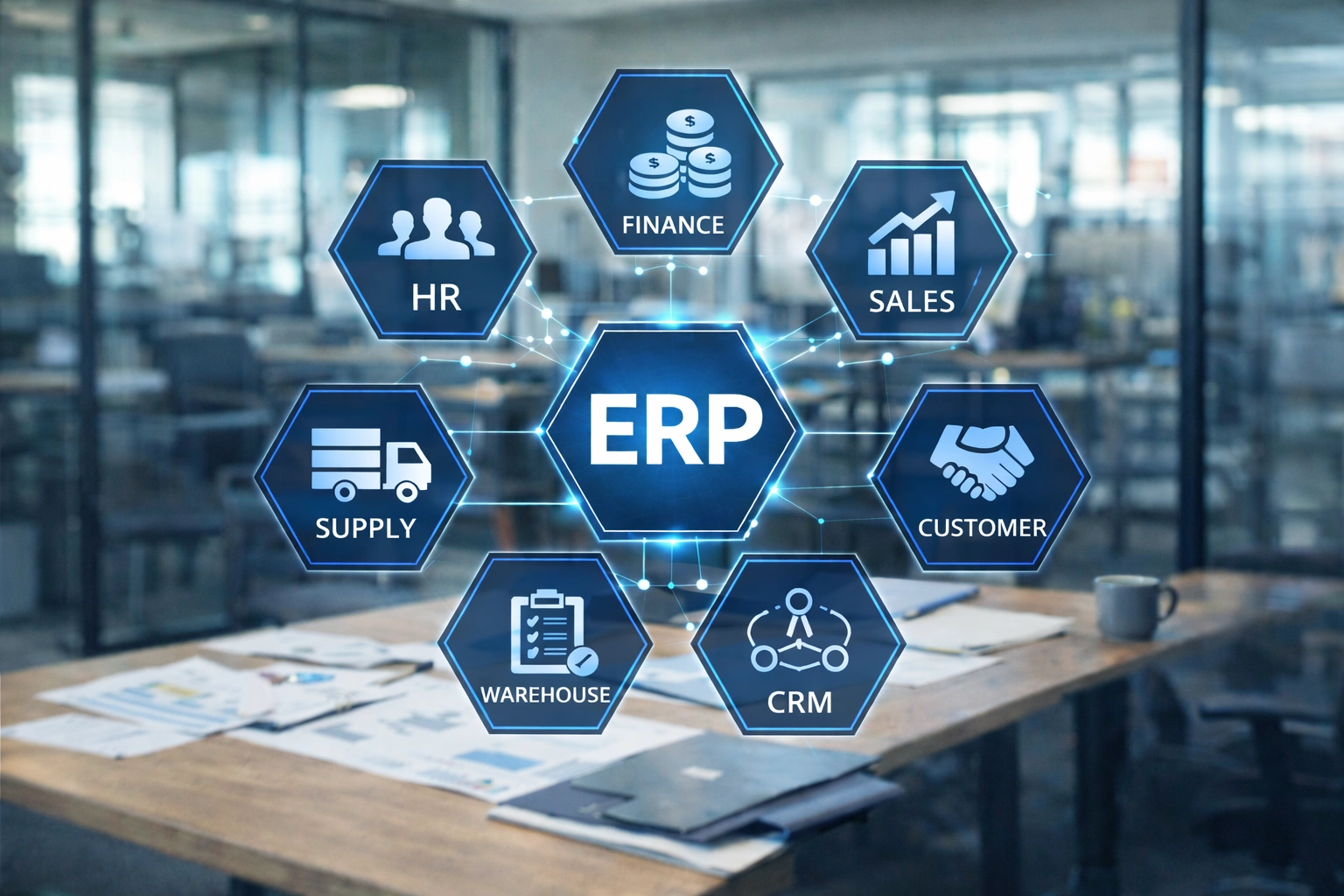
ERP systems form the backbone of a business's digital infrastructure. Financial records, operational processes, human resources, inventory movements, and reporting mechanisms are all integrated within the ERP system. However, the true contribution of an ERP system to a business is not simply consolidating these processes into a single software package. The crucial factor is the extent to which the ERP system aligns with the structural requirements of the industry in which the business operates.
A significant portion of the problems encountered in ERP projects stem not from the technical capabilities of the software, but from industry incompatibility. General-purpose ERP systems aim to cater to numerous sectors. While this approach theoretically offers flexibility, in practice it pushes businesses into intensive customization processes, complex workflows, and unsustainable structures. The situation arises where, instead of adapting the ERP to the business, the business is forced to adapt to the ERP.
At this point, industry-specific ERP solutions redefine the ERP approach.
The Industry Reality of ERP Selection
Each sector is built upon its own unique business logic. A manufacturing company's perception of time, inventory approach, and cost calculation method are different from a service sector company's resource utilization and revenue model. The same ERP software will not produce the same value in these two structures. This is because ERP is not just a data processing system, but a mechanism that directs processes.
General ERP solutions offer broad sets of functions to cover the common denominators of different industries. However, this breadth brings complexity. Users are forced to work with screens and reports that do not align with their own business practices. Over time, ERP ceases to be a tool that simplifies processes and becomes a system that circles around processes.
Industry-specific ERP solutions address this problem directly. The system is designed taking into account the real operational needs of the sector. Business processes are not adapted to the software; the software becomes a natural extension of the processes.
The Fundamental Principle of a Sector-Specific ERP Approach
Industry-specific ERP solutions embed the workflows, data relationships, and reporting requirements of a particular sector into the core of the system. This approach ensures that ERP is not just a technology investment, but also a management tool containing industry-specific knowledge.
In such systems, users do not encounter terminology unfamiliar to the industry. Reports are shaped around indicators that are truly needed when making decisions in the sector. The ERP becomes a tool that reflects the daily operations of the business. This increases the speed of system adoption and reduces user resistance.
ERP Selection in the Manufacturing Sector

In the manufacturing sector, ERP systems are central to operational control. Production planning, capacity utilization, work orders, work-in-process tracking, and cost calculation processes are managed through ERP. Even the smallest deviation in these processes directly affects cost and delivery performance.
Industry-specific manufacturing ERP solutions treat production recipes, bills of materials, and work orders as fundamental elements of the system. Production costs are calculated not only through accounting records but also through real-time production data. This approach enables production managers to make decisions based on current situations, not historical data.
In general ERP systems, production processes are often supported by additional modules or extensive customizations. This increases system complexity. Industry-specific solutions, on the other hand, place production at the center of the ERP system.
ERP Approach for Retail and E-Commerce
In the retail and e-commerce sectors, the primary function of an ERP system is to manage high-volume transactions consistently and quickly. Inventory accuracy, price management, and data integrity across sales channels are vital for this industry.
Sector-specific retail ERP solutions consider the multi-channel sales structure as a core component of the system. Instantaneous data flow is ensured between physical stores, e-commerce sites, and marketplaces. ERP becomes more than just a system that provides post-sales reporting; it becomes a management tool capable of predicting inventory risks and demand trends.
This structure enables more accurate sales and supply decisions. ERP makes not only what has happened, but also what is happening, visible.
The Differences of ERP Usage in the Service Sector
The role of ERP in the service sector differs significantly from that in product-based sectors. Time, human resources, and project-based work take precedence over physical inventory. Revenue is more closely related to the duration and quality of service provided than to the number of units produced.
Industry-specific service ERP solutions place project management, resource planning, and service-based cost tracking at the heart of the system. The ERP clearly shows how much resource is used in each project and how that resource generates costs and revenue for the business. This approach enables service businesses to accurately analyze their profitability.
General ERP systems often address these needs indirectly. Industry-specific solutions, on the other hand, treat the service concept as a fundamental design element of the system.
Logistics and Supply Chain Focused ERP Systems
In the logistics sector, ERP systems become a crucial element for operational speed and accuracy. Shipping, warehouse management, and supply chain coordination are all managed through ERP systems. Delays or data inconsistencies in these processes lead to cascading effects.
Industry-specific logistics ERP solutions address warehouse movements, shipment planning, and transportation costs in a holistic manner. ERP not only records completed transactions but also reveals operational bottlenecks and areas of inefficiency. This structure enables logistics operations to become more controlled and predictable.
The Strategic Impact of Industry-Specific ERP
Industry-specific ERP solutions provide strategic contributions beyond simply improving operational efficiency. The reporting structure is designed to align with the industry's decision-making dynamics. Management can analyze not only past performance but also future trends through the ERP system.
Reducing the need for customization increases the long-term sustainability of the system. The ERP does not become a complex structure over time. Updates and new needs are met within the system's natural architecture.
Long-Term Consequences of ERP Selection
Choosing an ERP system should be considered a long-term management decision, not a short-term software investment. ERP solutions unsuitable for the industry force businesses to develop off-site solutions. This weakens the central role of the ERP system and compromises data integrity.
Industry-specific ERP solutions offer a structure more compatible with a business's growth and transformation processes. ERP becomes a management infrastructure that can keep pace with the changing needs of the business.
ERP Approach from an Entranet Perspective
The true value of an ERP system is measured by how accurately it represents a business's processes. ERP approaches that focus on industry needs increase the digital maturity of businesses. When business processes, data structures, and reporting models are considered from this perspective, ERP becomes not just software, but a strategic management platform.
For comprehensive assessments of ERP systems and industry-specific business processes, please visit https://www.entranet.com to review the relevant content.
Conclusion
Industry-specific ERP solutions offer an approach that centers on the operational realities of businesses. ERP selection should be evaluated based on industry suitability rather than technical specifications. The right ERP doesn't complicate business processes; it works seamlessly with them.
The value of an ERP system is directly proportional to how well it understands the industry.