
























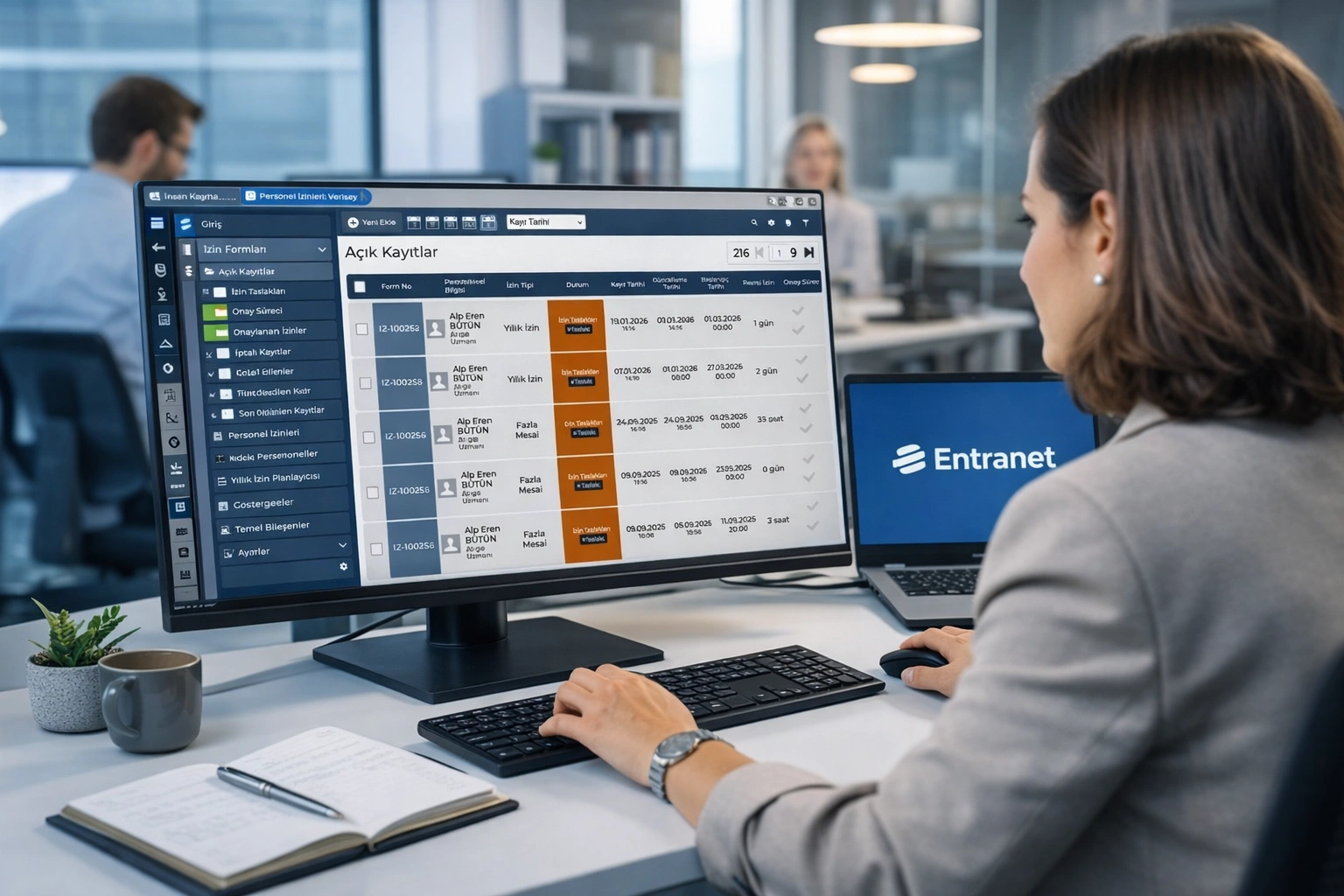
What is ERP in Human Resources?
ERP systems are software solutions that bring together all the core processes of a business under a common data structure. When human resources is included in this structure, it ceases to be a function limited only to payroll and personnel matters; it transforms into a strategic unit where all processes, from recruitment to performance, leave to expense management, are centrally managed.
What areas of Human Resources processes does ERP cover?
|
Area |
What does it provide? |
|
Permission Management |
Digital creation, approval, and tracking of permit requests. |
|
Personnel Attendance Control |
Automatic recording of entry, exit, and working hours data. |
|
Personnel Performance Management |
Systematic tracking of goals, KPIs, and evaluation processes (details: See the article "How to Track Employee Performance with ERP?"). |
|
Recruitment Processes |
Managing candidate tracking, the interview process, and the recruitment steps. |
|
Expense Claims |
Digital request and approval of personnel expenses. |
|
Personnel Inventory and Information Database |
Ensuring that personnel information is up-to-date and kept in a single central location. |
|
Internal Communication |
Sharing announcements, documents, and process information with employees. |
How do ERP systems transform HR processes?
In manual and fragmented processes, HR teams often waste time collecting data and keeping tables up-to-date. In an HR structure integrated with an ERP system, this data flows automatically; the HR team can focus on analysis and strategic decision-making instead of compiling reports.
Frequently Asked Questions
What is the difference between ERP and traditional payroll software in human resources?
Payroll software typically focuses on salary calculations and legal reporting; however, in HR, ERP integrates processes such as leave management, performance tracking, recruitment, and expense management into a single platform.
Is ERP necessary for HR in small businesses as well?
As the number of employees increases, manual tracking becomes more difficult; for small businesses, establishing a digital infrastructure early on prevents data loss and duplicate work during the growth process.
What are the tangible benefits of using ERP in HR?
Single-platform management provides benefits such as data accuracy, speed, and strategic decision-making (for a detailed list, see: Advantages of Using ERP in Human Resources).
How is performance tracking implemented in HR using ERP?
KPI setting, linking with attendance/leave data, and regular reporting are steps involved (detailed steps can be found in the article: How to Track Employee Performance with ERP).
Ready to consolidate your HR processes on a single platform? Try Entranet for free, no credit card required .
Related pages: How to Track Employee Performance with ERP? · Advantages of Using ERP in Human Resources ·Human Resources Solution